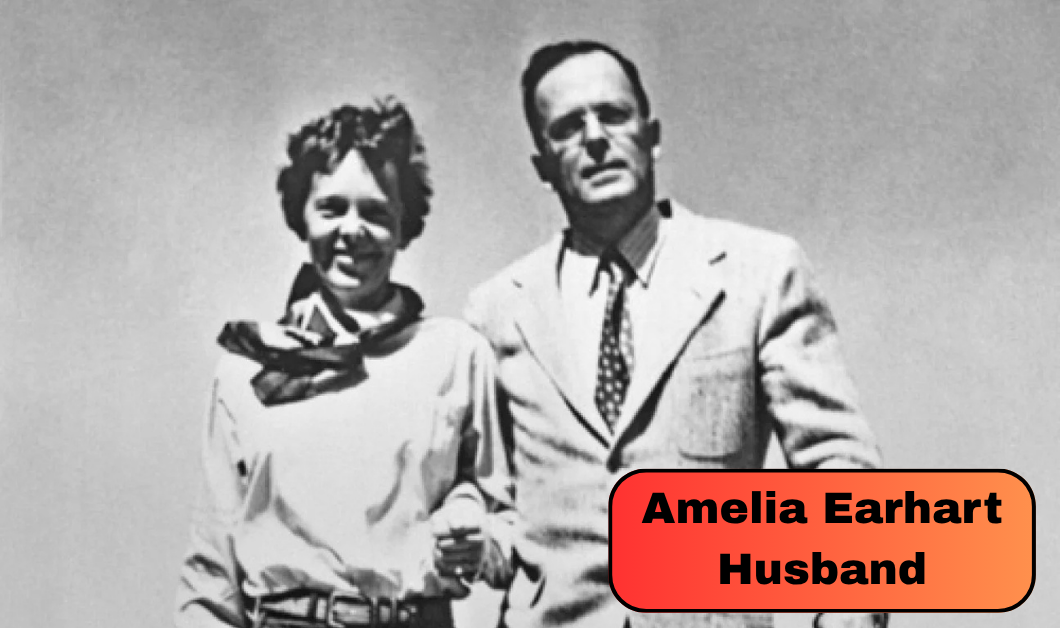
Amelia Earhart’s husband was George Palmer Putnam, a publisher and publicist whom she married on February 7, 1931, in Noank, Connecticut. Putnam first helped promote Earhart after her 1928 transatlantic flight as a passenger, then became her manager and supported her writing, publicity and aviation ambitions. Their marriage was unusual for its time: Earhart insisted on retaining her independence, and a surviving premarital agreement set out her expectations for an equal partnership.
Amelia Earhart Husband George Putnam: How Their Marriage and Publishing Partnership Shaped Her Aviation Career
Introduction
Amelia Earhart’s husband, George Palmer Putnam, was more than the spouse of one of the world’s most famous aviators. He was a publisher, publicist and career manager who helped turn Earhart’s historic flights into books, speaking engagements and a public platform for promoting aviation. The couple married on February 7, 1931, in Noank, Connecticut, after first meeting through preparations for Earhart’s celebrated 1928 transatlantic flight. Their partnership combined marriage with professional collaboration, while Earhart worked to protect her independence in an era when women were often expected to put domestic life first.
Their relationship was unusual for its time. Earhart proposed a marriage built around mutual respect rather than traditional expectations, and a surviving premarital agreement shows that she wanted to retain control over her own work and identity. Putnam helped promote her achievements, but Earhart’s flying records, writing and advocacy were her own accomplishments. Understanding their relationship offers a fuller picture of how she built her career—and why her independence was central to her life.
What Happened? Amelia Earhart Married George Palmer Putnam in 1931
Earhart and Putnam’s relationship developed after the aviation milestone that made her internationally famous. In June 1928, Earhart crossed the Atlantic aboard the aircraft Friendship with pilot Wilmer Stultz and mechanic Louis “Slim” Gordon. She was the first woman to make a transatlantic flight, although she was a passenger rather than the pilot for most of the journey. Putnam, who helped organize and publicize the project, became her manager after the flight.
Putnam recognized that the public’s interest in Earhart could help her build a lasting career. He helped arrange publicity, speaking engagements and publishing opportunities. Earhart, meanwhile, continued to develop as a pilot and used her growing public profile to encourage greater participation by women in aviation.
Their professional relationship became romantic, and they married in February 1931. Earhart was 33 years old; Putnam was a publisher with an established career and previous marriage behind him. Their wedding took place in Noank, Connecticut, and Earhart retained her own name professionally rather than adopting the traditional public identity of “Mrs. Putnam.” Purdue University’s archival biography records the marriage and the aviation achievements that followed.
The marriage did not mean Earhart stepped away from flying. In fact, some of her most significant achievements came after the wedding, including her solo flight across the Atlantic in 1932 and her later long-distance flights across the Pacific.
Who Was George Palmer Putnam?
George Palmer Putnam, born in 1887, was an American publisher and publicist. He had experience promoting authors and books before he became closely associated with Earhart. His work with her drew on that background: he helped shape the public presentation of her achievements and supported the commercial side of her career.
Putnam’s role was especially important after Earhart’s 1928 transatlantic crossing. The flight brought her widespread attention, but converting public recognition into a sustained career required more than one headline. Books, lectures, magazine work and commercial opportunities gave Earhart ways to earn a living while continuing to fly.
According to Purdue University’s archival description of Putnam, he offered to help Earhart write about her Atlantic crossing, following a publishing approach he had used with aviator Charles Lindbergh. Earhart’s first book, 20 Hrs. 40 Min., appeared in 1928. Putnam later published The Fun of It in 1932.
His influence was therefore significant, but it should not obscure Earhart’s own agency. She was already a pilot, held aviation ambitions of her own and used her public position to advocate for women. Putnam provided publishing and publicity expertise; Earhart supplied the achievements and ideas that made her a compelling public figure.
How Their Publishing Partnership Helped Earhart’s Career
Turning a flight into a lasting public profile
Earhart’s 1928 flight brought international attention, but Putnam helped extend that attention beyond the event itself. Their publishing partnership allowed her to tell the story in her own books and reach readers who might never attend an aviation event.
20 Hrs. 40 Min. chronicled her experience on the Friendship flight. Her later book, The Fun of It, published in 1932, reflected her wider experiences and enthusiasm for flying. These works contributed to a public identity that included not only a record-setting aviator but also a writer able to explain why flight mattered.
Expanding opportunities beyond books
Putnam also helped organize lecture tours and public appearances. Earhart wrote for magazines, promoted aviation and became a familiar figure in advertising and public campaigns. Such opportunities gave her a broader platform to discuss flying and the role women could play in the field.
This mattered because aviation was still developing as a commercial industry, and women pilots faced social and practical barriers. Publicity could help attract attention to women’s capabilities, but it could also turn an aviator into a marketable personality. Earhart navigated both sides of that reality, using her fame to support her work while continuing to pursue demanding flights.
Supporting a career that continued after marriage
Earhart did not abandon her professional goals when she married Putnam. In 1931, she completed a solo transcontinental journey in an autogiro. In May 1932, she became the first woman to fly solo across the Atlantic. She subsequently set additional long-distance records and continued promoting aviation.
Putnam’s management and publicity work helped create the conditions for a sustained public career, but the flights themselves depended on Earhart’s piloting, planning and judgment. Their partnership is best understood as a collaboration between a skilled aviator and a publisher who knew how to communicate her achievements to a wide audience.
Amelia Earhart’s Premarital Agreement: A Marriage Built Around Independence
One of the most revealing documents associated with the couple is Earhart’s premarital agreement, dated February 7, 1931. The document is preserved in the George Palmer Putnam Collection of Amelia Earhart Papers at Purdue University. The Smithsonian’s National Portrait Gallery also catalogues the agreement as a historical document written by Earhart and addressed to Putnam.
The agreement is significant because it records Earhart’s own expectations rather than relying only on later descriptions of the marriage. She wanted the relationship to allow both people to retain their independence. The terms expressed her opposition to rigid, traditional assumptions about marriage and made clear that her work and identity were not to be swallowed by the relationship.
The agreement also contemplated the possibility that the marriage might not work. Earhart proposed that they should be willing to part if they did not find happiness together after a year. Historical accounts note that the couple remained together until her disappearance in 1937.
The document should not be read as proof that the marriage was merely a business arrangement. Rather, it shows that Earhart wanted a relationship based on choice, honesty and respect. For a woman pursuing a demanding public career in the early 1930s, those expectations were unusually explicit.
What Did George Putnam Do to Support Her Aviation Ambitions?
Putnam supported Earhart by helping manage the public and commercial dimensions of her career. He worked on her publishing projects and helped organize publicity and lectures after her flights. This gave Earhart opportunities to earn money and communicate with audiences while continuing her aviation work.
The clearest example of the balance between support and independence came in 1932, when Earhart prepared for her solo transatlantic flight. On May 20, she departed Harbor Grace, Newfoundland, aiming to fly to Paris. Difficult weather, ice and mechanical problems forced her to land near Londonderry, Northern Ireland, rather than reach her intended destination. Even so, the flight made her the first woman to cross the Atlantic alone and the second person to do so.
A contemporaneous report reproduced in the U.S. National Archives records Earhart praising Putnam as a “good sport” for allowing her to make the solo crossing. The report quoted her saying that he did not interfere with her flying and that she did not interfere with his affairs. The comment is consistent with the principles expressed in her premarital agreement: marriage, in her view, should not require either partner to surrender a professional life.
Putnam’s support did not mean that Earhart’s achievements were his to claim. He helped with planning, promotion and public communications, while she took on the physical and technical challenges of flying. Their complementary roles helped sustain a career that required both aviation skill and a public platform.
Key Details About Amelia Earhart and George Putnam
- Husband: George Palmer Putnam, an American publisher and publicist.
- Wedding date: February 7, 1931.
- Wedding location: Noank, Connecticut.
- How they met professionally: Putnam helped publicize the 1928 transatlantic flight that made Earhart famous.
- Publishing partnership: Putnam helped publish and promote Earhart’s books, including 20 Hrs. 40 Min. and The Fun of It.
- Marriage agreement: Earhart set out expectations for independence and mutual respect in a surviving premarital agreement.
- Major achievement after marriage: Earhart completed her solo transatlantic flight in May 1932.
- Last known flight: Earhart disappeared in July 1937 during an attempt to fly around the world with navigator Fred Noonan.
- Putnam’s response to her disappearance: After the U.S. government ended its official search in July 1937, Putnam continued financing a private search until October of that year.
What Happened to Their Marriage After Earhart Disappeared?
In 1937, Earhart attempted to circumnavigate the globe with navigator Fred Noonan. On July 2, after flying from Lae, New Guinea, toward Howland Island in the Pacific, the pair lost radio contact with the U.S. Coast Guard cutter Itasca. Despite a major search, neither Earhart, Noonan nor their aircraft was found. Purdue University’s historical biography records that the U.S. government ended its search in July, while Putnam continued to finance a private effort through October. Earhart was declared legally dead in 1939.
Her disappearance ended the couple’s shared life but did not resolve the mystery of what happened to her. Putnam remained closely associated with her story through his role in preserving and promoting her legacy. The papers now held by Purdue University include correspondence, photographs, documents and other materials connected with their relationship and her aviation career.
The existence of this archive matters because it allows historians to examine letters and records rather than rely solely on later recollections. It also provides a way to study Earhart as a person with professional goals, private relationships and carefully articulated views about marriage.
What Officials and Historical Organizations Say
Purdue University Libraries and Archives preserve the George Palmer Putnam Collection of Amelia Earhart Papers, including correspondence and the premarital agreement. The collection provides primary-source material for studying the couple’s relationship and Earhart’s career.
The Smithsonian’s National Air and Space Museum describes Putnam as Earhart’s manager after her transatlantic passenger flight and notes that she married him hesitantly in 1931, with the understanding that they could separate if unhappy. The museum’s account emphasizes that they remained together until her disappearance.
The National Archives has also been releasing government records related to Earhart and her final flight. In September 2025, the U.S. government directed the declassification and release of relevant records, and the National Archives has made materials available in batches. These releases concern the historical record of Earhart and her disappearance; they do not change the documented date of her marriage to Putnam or the existence of their premarital agreement.
Taken together, these sources support a clear picture: Putnam was a central figure in the public and publishing side of Earhart’s career, while Earhart deliberately protected her independence as an aviator.
Why Their Marriage Still Matters
Earhart and Putnam’s marriage remains interesting because it challenged common expectations about women, marriage and work in the early twentieth century. Earhart was not content to become known only as a famous man’s wife. She continued flying, writing, lecturing and advocating for women in aviation after her marriage.
Their publishing partnership also demonstrates how a pioneering achievement can gain broader influence when it is documented and communicated effectively. Earhart’s books helped preserve her own account of flying, while publicity brought her work to audiences far beyond the aviation community.
At the same time, the story needs nuance. Putnam helped manage the public side of Earhart’s career, but it would be misleading to attribute her achievements to him. Her flights depended on her skill and determination. Their relationship worked, in part, because the agreement she proposed explicitly recognized that her ambitions mattered.
The surviving documents also offer a useful corrective to simplified descriptions of their marriage as either purely romantic or merely strategic. The record shows two people who built a personal relationship alongside a professional collaboration, with Earhart making clear that her independence was a condition of that partnership.
What Happens Next? The Historical Record Continues to Be Studied
There is no new development in the historical fact of Earhart’s marriage to Putnam: they married in 1931 and remained connected until her disappearance six years later. The ongoing work involves examining archival records, correspondence and government files to better understand Earhart’s life, career and final flight.
The National Archives’ releases concerning Earhart’s disappearance may provide additional material for researchers, but no document should be treated as resolving the mystery unless the evidence genuinely supports that conclusion. Purdue’s collection remains a valuable source for understanding the relationship itself, including the agreement that set out Earhart’s expectations before marriage.
For readers, the central takeaway is that George Palmer Putnam was both Earhart’s husband and an important publishing and publicity partner. Their relationship helped amplify her work, but her independence and achievements remained at the heart of her legacy.
Conclusion
Amelia Earhart’s husband, George Palmer Putnam, helped shape the public reach of her aviation career through publishing, management and publicity. Their marriage, solemnized on February 7, 1931, was distinctive for Earhart’s insistence on independence and mutual respect. The premarital agreement preserved in the archives offers unusually direct evidence of her expectations.
Putnam supported her books and public appearances, while Earhart continued to set records and advocate for women in aviation. After she disappeared during her 1937 world-flight attempt, he helped finance further searches. Today, their correspondence and related records help historians understand a partnership that was both personal and professional—and a marriage that did not require Earhart to give up the ambitions that made her famous.
Frequently Asked Questions
1. Who was Amelia Earhart’s husband?
Amelia Earhart’s husband was George Palmer Putnam, an American publisher and publicist. He helped manage her career and promote her books and aviation achievements. They married on February 7, 1931.
2. When did Amelia Earhart marry George Putnam?
Earhart and Putnam married on February 7, 1931, in Noank, Connecticut.
3. How did Amelia Earhart meet George Palmer Putnam?
They met through preparations for Earhart’s 1928 transatlantic flight as a passenger aboard the Friendship. Putnam helped publicize the flight and later became her manager.
4. Did George Putnam help Amelia Earhart’s aviation career?
Yes. Putnam helped organize publicity, lectures and publishing opportunities that supported Earhart’s public career. Earhart herself carried out the flying and earned her aviation records.
5. What was in Amelia Earhart’s premarital agreement?
The agreement expressed Earhart’s desire for independence and mutual respect within marriage. It made clear that she did not want traditional marital expectations to prevent her from pursuing her work and allowed for the possibility of separation if the marriage did not bring happiness.
6. Did Amelia Earhart keep her own name after marriage?
Yes. She continued to be known professionally as Amelia Earhart rather than abandoning her established identity after marrying Putnam.
7. Did George Putnam and Amelia Earhart have children?
No children are documented for the couple in the principal historical biographies and archival sources cited here.
8. What happened to George Putnam after Amelia Earhart disappeared?
After Earhart and navigator Fred Noonan disappeared in July 1937, Putnam continued financing a private search after the government’s official search ended. Earhart was declared legally dead in 1939. Putnam died in 1950.