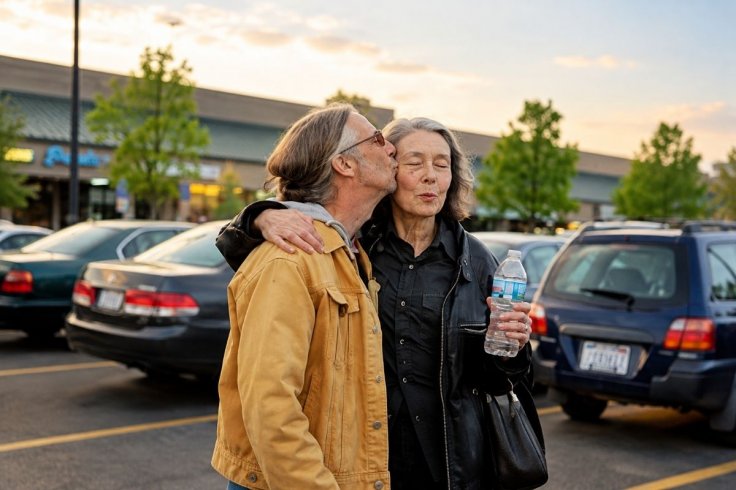
Anne Carson’s husband is Robert Currie, an artist who is also her longtime creative collaborator. The couple have worked together on experimental books, artistic performances and teaching projects, and they have spent time living in Reykjavík, Iceland, since 2008. Both received Icelandic citizenship in 2022. Their partnership has drawn renewed attention following Carson’s Nobel Prize in Literature win on October 8, 2026.
Introduction
Canadian poet, essayist and classicist Anne Carson is married to artist Robert Currie, a creative partner whose work has intersected with hers across experimental books, performances and collaborative teaching. Although Carson is widely known for her distinctive writing and scholarship on ancient Greek literature, Currie has played an important role in the visual and collaborative side of her artistic practice.
Interest in Anne Carson’s husband, Robert Currie, has grown following a major milestone in her career. On October 8, 2026, Carson was awarded the Nobel Prize in Literature. The Swedish Academy recognised her innovative body of work, which moves between poetry, prose, translation and other literary forms. Carson lives in Iceland with Currie, and both became Icelandic citizens in April 2022.
Their relationship is notable because it extends beyond marriage into an artistic partnership. Rather than working only within conventional literary formats, Carson and Currie have explored ways to combine words, images, objects, performance and unexpected creative prompts. Their work offers a glimpse into how two artists can share a creative life while bringing different skills and perspectives to their projects.
Who Is Anne Carson’s Husband, Robert Currie?
Robert Currie is an artist and creative collaborator best known publicly for his work alongside Anne Carson. He has contributed to projects involving book design, performance and experimental approaches to literature. He is not simply known as Carson’s spouse; interviews and literary profiles describe a working relationship built around artistic experimentation and collaboration.
Currie generally maintains a lower public profile than Carson. Available interviews provide more detail about their shared creative process than about his private background, early life or personal history. Reliable public information about his date of birth, family background and net worth is limited, so those details should not be treated as established facts.
His importance to Carson’s career is clearest in the projects they have undertaken together. Their collaboration includes the design of Carson’s book Nox, experimental performances connected with her writing, and the co-teaching of a class that encouraged students to explore creative ideas beyond conventional writing exercises.
Anne Carson and Robert Currie’s Marriage
Carson and Currie have built a partnership that combines their personal relationship with their shared interest in art. However, the couple have kept many details of their marriage private.
Public interviews tend to focus on their ideas, working methods and artistic collaborations rather than on personal milestones. Information about the exact date or location of their wedding is not clearly established in the reliable sources reviewed for this article. It would therefore be misleading to give a specific wedding date without stronger evidence.
What is documented is the long-running nature of their partnership. They have collaborated on projects over many years and appeared together in conversations about translation, artistic experimentation and the relationship between different forms of expression. In a 2012 interview published by The Kenyon Review, both discussed how they approach creative collaboration, including the importance of trust and allowing different artistic contributions to coexist.
Their relationship also challenges the assumption that creative partners must work in identical ways. Their interviews suggest that collaboration can involve independent thinking, unexpected decisions and a willingness to let an idea develop without controlling every part of the process.
For readers interested in Carson’s personal life, this is one of the most distinctive aspects of the relationship: the couple’s public story is documented primarily through what they make together, rather than through extensive disclosures about their private lives.
How Did Anne Carson Meet Robert Currie?
Biographical accounts identify the University of Michigan community in Ann Arbor as the setting where Carson met Currie. Carson taught at the university, and their relationship eventually developed into both a marriage and an artistic partnership.
Beyond that broad account, reliable sources offer limited detail about the precise circumstances of their first meeting or when their romantic relationship began. The couple have not made every stage of their relationship a matter of public record.
Their subsequent work, however, provides a clearer picture of how their interests came together. Carson’s literary practice often combines classical scholarship, poetry, translation and visual experimentation. Currie’s artistic contribution has helped extend that work into book objects, performance and collaborative projects.
Their partnership illustrates how a relationship can develop around shared intellectual interests without requiring both people to have identical professional roles. Carson is recognised internationally for her writing and scholarship, while Currie’s public profile is more closely associated with their collaborative artistic work.
Robert Currie’s Role in Anne Carson’s Creative Work
One of the best ways to understand Currie’s contribution is to look at the projects they have made together.
1. The experimental book Nox
Nox, published by New Directions in 2010, is among Carson’s most distinctive works. It takes the form of an accordion-fold book housed in a box, bringing together fragments of text, images, documents and reflections.
The work centres on Carson’s brother, Michael, whose long absence from her life and eventual death became an important personal subject in her writing. Carson drew on Catullus’s poem about the death of a brother, using translation and visual fragments to explore memory, loss and the limits of what can be recovered about another person.
Currie collaborated with Carson on the book’s design. The result is not a conventional collection of poems but a carefully constructed physical object in which the arrangement of words and images contributes to the meaning.
The collaboration shows why Currie’s role matters. A project such as Nox depends not only on the language of the text but also on how the reader encounters its fragments, turns its pages and moves through its visual structure.
2. Antigonick and experimental performance
Carson’s Antigonick, her version of Sophocles’ ancient Greek tragedy Antigone, is another work associated with her experimental approach to literary form. Carson has worked across translation, poetry, drawing and performance, and her projects often invite artists to engage with a text in ways that extend beyond the printed page.
Currie has been associated with the collaborative and performance side of Carson’s work, including projects involving Antigonick. Their wider practice explores how literary texts can be reimagined through different media rather than treated as fixed works that exist only in books.
It is important, however, to distinguish their shared projects from Carson’s solo writing. Currie’s participation in a design or performance collaboration does not mean he co-authored every poem, translation or book she has published.
3. Teaching creativity through EgoCircus
Carson and Currie also taught a collaborative class known as EgoCircus at New York University and in other settings. The class encouraged students to experiment with unfamiliar methods and to use skills beyond traditional writing.
In a 2024 interview with The Paris Review, Carson described prompts they gave students, including instructions such as burning something and using the ash, improving a hotel, or creating work from a small set of unrelated words. The aim was to encourage students to discover abilities they might not have known they possessed.
The approach reflects a broader principle in their collaboration: creativity does not always begin with a complete plan. It can emerge through chance, unusual constraints and the interaction of different ideas.
Their teaching work also reveals an important side of their partnership. They did not limit collaboration to producing books or performances; they helped others explore new ways of making art.
Life in Iceland: Why Anne Carson and Robert Currie Chose Reykjavík
Iceland has become an important part of Carson and Currie’s shared life. A 2024 Paris Review profile reported that the couple had spent time in Reykjavík each year since 2008. The interview described Carson’s apartment in the city and her interest in Iceland’s stark landscape, open space, sea and volcanic terrain.
The setting connects naturally with some of the interests found in Carson’s work. Her writing often explores absence, uncertainty, fragments and the relationship between what can be expressed and what remains beyond language. In the 2024 interview, she discussed the creative possibilities of empty space and the gaps that appear in ancient texts when parts of the original writing have been lost.
It would be too simplistic to claim that Iceland alone explains her literary style. Carson’s work has developed over decades through classical scholarship, translation, teaching and engagement with many artistic traditions. Nevertheless, her comments show that the landscape and atmosphere of Iceland have become part of the environment in which she thinks and works.
The couple’s life there also extends beyond temporary visits. On April 19, 2022, Anne Carson and Robert Currie received Icelandic citizenship. Icelandic public broadcaster RÚV reported on their citizenship when covering Carson’s Nobel Prize win in October 2026.
What does Iceland mean to their creative life?
The available evidence suggests that Iceland offers Carson and Currie a place to live and work while continuing their artistic activities. Their interviews discuss collaboration, landscape, performance and literary experimentation, but they do not establish a single official reason for choosing Iceland as their home.
Carson has spoken about the appeal of its open spaces and natural environment. For readers, those observations offer context for her working life without requiring every detail of her writing to be interpreted as a direct response to the landscape.
Anne Carson’s Nobel Prize in Literature in 2026
Carson’s husband and creative partnership have received renewed attention because of her Nobel Prize win.
On October 8, 2026, the Swedish Academy awarded Carson the Nobel Prize in Literature. The Academy praised her bold and inventive body of work, highlighting the way she engages with classical traditions while creating new literary forms. News coverage identified her as a Canadian-born writer living in Iceland.
The award recognises Carson’s own literary achievements. Her work includes poetry, essays, translations and experimental books that often combine the intellectual concerns of classical scholarship with contemporary artistic approaches.
Among her widely discussed books are Eros the Bittersweet, Autobiography of Red, If Not, Winter and Nox. These works demonstrate different sides of her practice, from exploring desire through ancient Greek literature to translating fragments of Sappho and examining personal loss through an experimental book form.
Currie’s role should be understood in that context. He is an important collaborator in selected projects, but the Nobel Prize recognises Carson’s literary oeuvre rather than a joint award to the couple.
The recognition has also brought fresh attention to Carson’s life in Iceland, where she and Currie have built a shared home and continued their creative work.
What Anne Carson and Robert Currie Have Said About Collaboration
Interviews with Carson and Currie reveal a working relationship shaped by experimentation and trust.
In their 2012 conversation with The Kenyon Review, they discussed the challenges of working together and the importance of trust in the creative process. Their comments suggest that collaboration involves allowing another person’s artistic judgment to influence a project, even when the outcome is not entirely predictable.
Their later interviews also show how their work can move between different forms. They have explored performance, visual art, book design and teaching, often encouraging people to approach familiar materials from a different direction.
This approach is particularly relevant to Carson’s literary reputation. Her writing often resists simple categorisation: a work may combine scholarship and poetry, or use the physical design of a book to convey meaning. Currie’s collaboration has helped make some of those experiments possible in visual and performative forms.
Still, the couple’s precise division of labour varies from project to project. It is more accurate to describe them as collaborators who contribute different skills than to assume that every work is jointly authored or that Currie is responsible for all the visual elements of Carson’s books.
What Is Known About Robert Currie’s Personal Life?
Publicly available information about Currie’s private life is limited compared with the extensive literary coverage of Carson.
He is identified as an artist and as Carson’s husband and collaborator. Their joint interviews provide information about their creative projects, teaching and life in Iceland, but reliable sources reviewed for this article do not establish comprehensive details about his age, date of birth, family background, education or personal wealth.
There is also no reason to infer private family details from the couple’s artistic work. Their public profile centres on literature and collaboration, and they have generally kept their personal life outside the spotlight.
For that reason, claims about Currie’s net worth, exact age or private family history should be treated cautiously unless supported by reliable evidence. What can be said with confidence is that his work has formed part of Carson’s wider creative world for many years.
Why Their Partnership Matters
The relationship between Anne Carson and Robert Currie offers an example of collaboration that crosses boundaries between literature, visual art and performance.
Carson’s writing is often associated with the meeting of ancient and modern ideas, the use of fragments and the exploration of uncertainty. Currie’s contributions to selected projects help extend that work into its physical and performative dimensions. Their teaching also reflects a shared interest in encouraging experimentation rather than relying on familiar methods.
Their partnership is not only interesting because they are married. It matters because their collaborative work demonstrates how literary meaning can be shaped by more than words alone. The layout of a book, the order in which fragments appear, the use of images and the conditions of a performance can all change how a reader or audience experiences a work.
At the same time, their story highlights the importance of recognising each person’s individual contribution. Carson’s Nobel Prize honours her distinctive literary achievement, while Currie’s role is best understood through the projects and artistic processes in which he has collaborated with her.
What Happens Next for Anne Carson and Robert Currie?
As of October 9, 2026, the most significant recent development in Carson’s public life is her Nobel Prize in Literature. The award ceremony is scheduled for December 10, 2026, in Stockholm.
There has been no confirmed public announcement establishing a new joint project by Carson and Currie specifically in response to the award. Their future work plans should therefore not be assumed.
Their established record, however, shows a continuing interest in literary experimentation, visual art, performance and collaboration. Readers can explore their interviews and Carson’s published works to understand how those interests have developed over time.
For anyone searching for information about Anne Carson’s husband, the clearest answer is that Robert Currie is both her spouse and a longtime creative partner. Their shared life in Iceland and their artistic projects provide meaningful context for understanding Carson’s work, even as many details of their private relationship remain private.
Frequently Asked Questions
1. Who is Anne Carson’s husband?
Anne Carson’s husband is Robert Currie, an artist and longtime creative collaborator. They have worked together on experimental books, performances and teaching projects.
2. Is Robert Currie an artist?
Yes. Currie is identified as an artist and has collaborated with Carson on book design, performance and other experimental projects.
3. How did Anne Carson meet Robert Currie?
Biographical accounts place their meeting in Ann Arbor, Michigan, while Carson was teaching at the University of Michigan. Reliable public sources provide limited detail about their first meeting.
4. Do Anne Carson and Robert Currie live in Iceland?
They have spent time in Reykjavík each year since 2008, according to a 2024 Paris Review profile. Both received Icelandic citizenship in April 2022.
5. Have Anne Carson and Robert Currie worked together?
Yes. Their collaborations include the design of Nox, experimental artistic projects and co-teaching a class known as EgoCircus. Their work explores connections between literature, visual art and performance.
6. Did Robert Currie receive the Nobel Prize with Anne Carson?
No. The 2026 Nobel Prize in Literature was awarded to Anne Carson for her literary work. Currie is her husband and collaborator, but the award was not announced as a joint prize.
7. When did Anne Carson and Robert Currie become Icelandic citizens?
They received Icelandic citizenship on April 19, 2022, according to reporting by Icelandic public broadcaster RÚV.
8. What is Robert Currie’s net worth?
A reliable, independently verified figure for Robert Currie’s net worth was not found in the sources reviewed. Online estimates without transparent evidence should not be treated as confirmed financial information.
