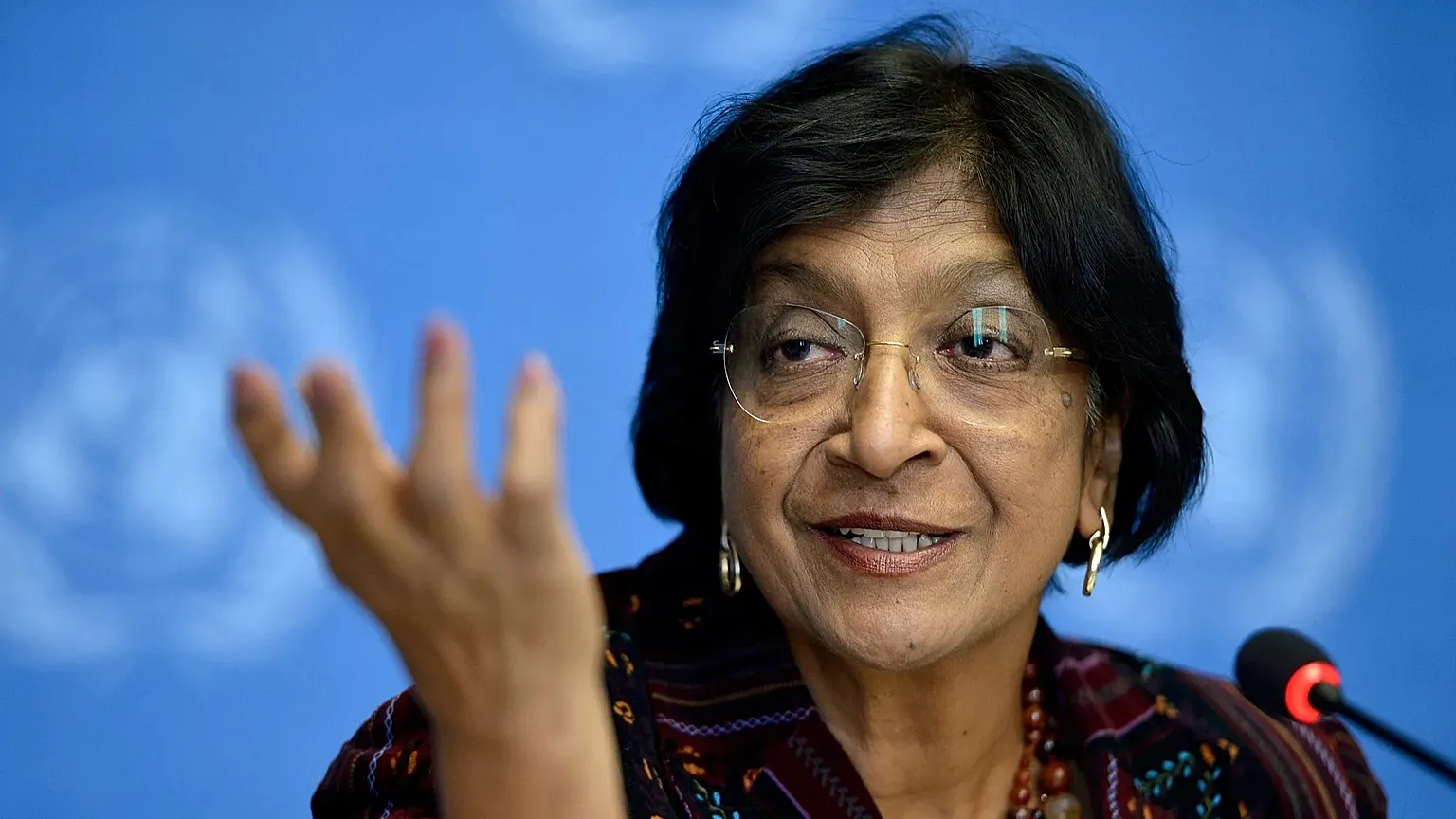
Navi Pillay’s husband was Gaby Pillay, a South African lawyer also known as Paranjothee Anthony Pillay. A United Nations biographical record lists Pillay as married to Gaby Pillay and notes that she had two daughters. Their family story is connected to South Africa’s apartheid era: historical accounts record that Gaby was detained by security police and that Navi Pillay represented him. Reliable public sources confirm these historical details, but the couple’s later marital status and Gaby Pillay’s current status are not clearly established by the authoritative records reviewed.
Navi Pillay Husband: Who Is Gaby Pillay?
The search for Navi Pillay’s husband leads to Gaby Pillay, a South African lawyer whose life became connected with one of the country’s most consequential periods of political struggle. Navi Pillay, formally known as Navanethem Pillay, built an international reputation as a judge and human rights advocate, while her early legal career involved defending people affected by apartheid-era restrictions and state repression.
Historical records identify Gaby Pillay as her husband and document that the couple had two daughters. One particularly significant episode occurred in 1971, when Gaby was detained by South African security police. Navi Pillay represented him, and the experience forms part of the historical record of her work challenging the treatment of political detainees.
Interest in Navi Pillay’s family has grown alongside attention to her professional achievements. On October 9, 2026, the United Nations announced that she had received the 2026 Nobel Peace Prize for her efforts to promote peace and international law. That recognition has renewed interest in the people and experiences connected with her life, including her husband and family.
However, there is an important distinction between what is documented and what remains uncertain: historical records confirm her marriage to Gaby Pillay, but the reliable sources reviewed do not establish all details of their later relationship. This article separates the available facts from information that cannot be independently confirmed.
What Happened? Why Is Navi Pillay’s Husband Trending?
Navi Pillay’s name has received renewed international attention following the announcement of the 2026 Nobel Peace Prize. As people learn more about her background, searches about her husband, children and personal life have also become relevant to understanding her story.
Pillay’s career spans South African law, international criminal justice and the United Nations. She served as a judge on the International Criminal Tribunal for Rwanda, became a judge at the International Criminal Court and later served as the UN High Commissioner for Human Rights from 2008 to 2014.
Her marriage to Gaby Pillay belongs to the earlier part of that journey. The historical record is especially notable because Gaby’s detention during apartheid brought Navi Pillay’s legal work into direct contact with the state’s treatment of political detainees.
The interest in their relationship is therefore not simply a matter of celebrity-style biography. It also offers a window into the circumstances surrounding Pillay’s early legal practice and the political environment in which she worked.
Who Is Gaby Pillay?
Gaby Pillay is identified in biographical sources as Navi Pillay’s husband and a lawyer in South Africa. Some sources give his fuller name as Paranjothee Anthony Pillay, while historical and biographical accounts commonly use the shorter name Gaby Pillay.
Compared with Navi Pillay, Gaby has a much smaller public profile. The available authoritative records provide limited details about his personal background, career and later life. For that reason, claims about his complete biography should be treated carefully unless they can be supported by dependable documentation.
What is clearly documented is his connection to the apartheid-era political environment and his detention by security police in 1971. Navi Pillay represented him during that period, according to South African historical accounts. The episode illustrates how the family’s personal circumstances intersected with her legal work.
Was Gaby Pillay also a lawyer?
Yes. Biographical sources identify Gaby Pillay as a lawyer. Navi Pillay was herself a lawyer who opened her own practice in Natal in 1967, at a time when racial discrimination restricted the professional opportunities available to non-white South Africans. She later became the first Black woman appointed as a judge to South Africa’s High Court.
Although both are associated with the legal profession, the available records do not provide enough verified information to construct a complete account of Gaby Pillay’s professional career. It would therefore be misleading to add unverified employers, positions or achievements to his biography.
When Did Navi Pillay Marry Gaby Pillay?
Available biographical accounts place Navi Pillay’s marriage to Gaby Pillay in January 1965. A United Nations biographical record subsequently listed her as married to Gaby Pillay and recorded that she had two daughters.
The marriage began before Navi Pillay became an internationally known jurist. She completed her law degree at the University of Natal in 1965 and went on to establish her legal practice in Natal in 1967. Her early professional years took place under apartheid, when laws and institutions systematically discriminated against non-white South Africans.
The date of the marriage is reported in biographical sources, but detailed public documentation about the wedding itself—including the ceremony, venue or private celebrations—is limited. Such details should not be presented as established facts without reliable evidence.
How did their relationship connect with apartheid?
The most clearly documented connection between the marriage and apartheid-era history is Gaby Pillay’s detention in 1971.
South African historical accounts state that Navi Pillay represented her husband after he was detained by security police. Her wider legal practice included defending political activists and challenging the treatment of detainees. In another significant case, she helped secure legal access for political prisoners held on Robben Island.
The detention episode is important because it shows how the political climate affected not only public activists but also people within the lives of lawyers who challenged the system. It is reasonable to see the case as part of the context in which Pillay developed her experience in defending people whose rights were threatened by state power. However, claims about the precise personal or emotional effect on the couple should not be stated as fact unless supported by direct testimony.
Navi Pillay’s Family and Children
A United Nations biographical document records that Navi Pillay had two daughters. Some biographical accounts identify them as Isvari and Kamini, but the amount of reliable, publicly available information about the family is limited.
Pillay’s public career has largely focused on law, human rights and international institutions. As a result, her daughters have not had the same public profile as their mother. Information about their occupations, private lives and current circumstances should not be inferred from their mother’s career.
The family record is relevant to readers looking for a fuller biography, but it is also an area where privacy and accuracy matter. A limited public record does not justify filling gaps with speculation.
How many children does Navi Pillay have?
The United Nations biographical record lists two daughters. Some secondary biographies name them as Isvari and Kamini. More detailed claims about their lives should be checked against reliable sources before being repeated.
What Is Known About Navi Pillay and Gaby Pillay’s Later Relationship?
Readers frequently search for whether Navi Pillay and Gaby Pillay remained married, divorced or were separated later in life. These are different questions, and the available evidence needs to be treated carefully.
The historical United Nations record confirms that Navi Pillay was married to Gaby Pillay when that biographical information was recorded. Some newer online biographies make further claims about a divorce or Gaby Pillay’s death, but the authoritative historical records reviewed for this article do not independently establish those details.
Consequently, it would be inaccurate to state definitively that the couple divorced, remained married throughout their lives or that Gaby Pillay died on a particular date without stronger corroboration. The most reliable conclusion is that they were married and had two daughters, while the details of their later relationship remain insufficiently documented in the sources reviewed.
This distinction matters because biographical websites can repeat claims without providing the original records or clear sourcing. When discussing a person’s private life, the absence of reliable confirmation should be acknowledged rather than treated as proof of any particular outcome.
Navi Pillay’s Career: From South Africa to International Justice
Understanding Navi Pillay’s career helps explain why her early family history is often discussed alongside her work as a lawyer. She did not begin her professional life as a global public figure. Her reputation developed through decades of legal work in South Africa and international institutions.
Early life and education
Navanethem “Navi” Pillay was born on September 23, 1941, in Durban, South Africa, to a family of Tamil Indian heritage. She studied at the University of Natal, earning a Bachelor of Arts degree in 1963 and a law degree in 1965. She later pursued advanced legal studies at Harvard Law School, receiving an LL.M. in 1982 and a Doctor of Juridical Science degree in 1988.
Her education and career developed against the backdrop of apartheid, a system of institutionalized racial segregation and discrimination. Non-white South Africans faced serious barriers in education, employment and access to professional opportunities. Pillay nevertheless established her own legal practice in Natal in 1967, becoming the first woman to do so in the province and a pioneering figure in the legal profession.
Defending political detainees
Pillay represented people affected by apartheid-era repression, including political activists. Her work addressed issues such as detention, access to lawyers and allegations of mistreatment in custody.
The case involving Gaby Pillay is part of this history. South African historical accounts state that she represented her husband after his detention by security police in 1971. Her wider legal work also included a successful effort in 1973 to secure access to legal counsel for political prisoners on Robben Island.
These cases formed part of a broader struggle over whether the state could exercise its power without meaningful legal safeguards. They also illustrate the role lawyers played in challenging apartheid through courts and legal procedures.
International criminal justice
After the end of apartheid, Pillay’s career expanded into international justice. In 1995, she joined the International Criminal Tribunal for Rwanda, eventually serving as its president. The tribunal prosecuted people responsible for genocide and other serious crimes committed during the 1994 Rwandan genocide.
Pillay later served as a judge at the International Criminal Court from 2003 to 2008. She became the United Nations High Commissioner for Human Rights in 2008, holding the position until 2014. Her responsibilities included advocating for human rights, equality and accountability for serious violations.
Her career demonstrates how legal experience developed in one national context can contribute to wider debates about international justice. It also explains why interest in her personal history often leads readers back to the apartheid years and the people closest to her during that period.
What Did the United Nations Say About Navi Pillay?
The United Nations has documented Pillay’s legal and human rights career and recognized her contribution to international justice.
On October 9, 2026, UN material announced that Pillay had received the 2026 Nobel Peace Prize for her efforts to promote peace and international law. The UN highlighted her work in South Africa, her service in international criminal tribunals and her leadership as High Commissioner for Human Rights.
UN records also provide biographical information that helps answer questions about her family. A historical biographical document lists her as married to Gaby Pillay and notes two daughters. That record is useful evidence for the marriage and family details, but it should not be treated as a complete account of every later development in their private lives.
The UN’s public material focuses primarily on Pillay’s professional work rather than her marriage. It does not provide a comprehensive, current account of Gaby Pillay’s life or the couple’s later relationship.
Why Navi Pillay’s Husband Is a Topic of Interest
There are several reasons readers may be looking for information about Gaby Pillay.
First, renewed attention to Navi Pillay’s achievements has prompted interest in her background. Major professional milestones often lead readers to look for information about a public figure’s upbringing, family and personal experiences.
Second, Gaby Pillay is connected to an important period in South African history. His detention during apartheid and Navi Pillay’s role as his lawyer provide a documented example of how political repression affected individuals and families.
Third, the available information is uneven. Navi Pillay’s career is documented by international organizations and legal institutions, but fewer authoritative details are available about Gaby Pillay’s later life. This can leave readers with conflicting claims from online biographies.
A responsible account should focus on the facts that can be verified. The historical record supports the marriage, the existence of two daughters and the detention-related legal episode. It does not justify presenting every claim about divorce, death or the family’s private circumstances as confirmed.
What Happens Next?
There is no confirmed upcoming announcement about Navi Pillay’s marriage or family relationship in the authoritative sources reviewed for this article. Her family life is separate from the official recognition of her legal career.
The recent Nobel Peace Prize announcement is a significant development in her public biography. Readers seeking additional information about Gaby Pillay should look for dependable historical records, official biographies or direct interviews rather than relying solely on unsourced online claims.
For now, the most defensible summary remains straightforward: Gaby Pillay was Navi Pillay’s husband, he was a lawyer, and the couple had two daughters. His detention during apartheid is a documented part of the historical context surrounding her early legal career. Details of their later relationship and his current status remain unconfirmed in the authoritative records consulted.
Frequently Asked Questions
1. Who was Navi Pillay’s husband?
Navi Pillay’s husband was Gaby Pillay, also identified in some biographical accounts as Paranjothee Anthony Pillay. He was a South African lawyer.
2. What was Gaby Pillay’s profession?
Gaby Pillay is identified as a lawyer in biographical sources. Publicly available authoritative information about the full course of his professional career is limited.
3. When did Navi Pillay marry Gaby Pillay?
Biographical accounts place their marriage in January 1965. A United Nations biographical record also lists Gaby Pillay as her husband.
4. Did Navi Pillay and Gaby Pillay have children?
Yes. A historical United Nations biographical record states that Navi Pillay had two daughters. Some secondary biographies identify them as Isvari and Kamini.
5. Was Gaby Pillay detained during apartheid?
Yes. South African historical accounts report that Gaby Pillay was detained by security police in 1971 and that Navi Pillay represented him. The episode is part of the documented history of her legal work during apartheid.
6. Did Navi Pillay and Gaby Pillay divorce?
The authoritative records reviewed for this article do not conclusively establish whether they later divorced. Some online biographies make claims about their later relationship, but those claims could not be independently verified from the primary historical material consulted.
7. Is Gaby Pillay still alive?
His current status could not be reliably confirmed from the authoritative records reviewed. Some secondary websites make claims about his death, but without stronger corroboration it would be inappropriate to present a date or circumstances as established fact.
8. Why is Navi Pillay well known?
Navi Pillay is a South African jurist and human rights advocate who served as a judge at the International Criminal Tribunal for Rwanda and the International Criminal Court, and as UN High Commissioner for Human Rights from 2008 to 2014. The United Nations announced on October 9, 2026, that she had received the 2026 Nobel Peace Prize for her work promoting peace and international law.
:max_bytes(150000):strip_icc():focal(992x499:994x501)/naomi-osaka-parents-new-york-city-070626-38dda1eec0044850869812aeb210dea5.jpg "Naomi Osaka Parents: Meet Leonard Francois and Tamaki Osaka’s Inspiring Family Story")