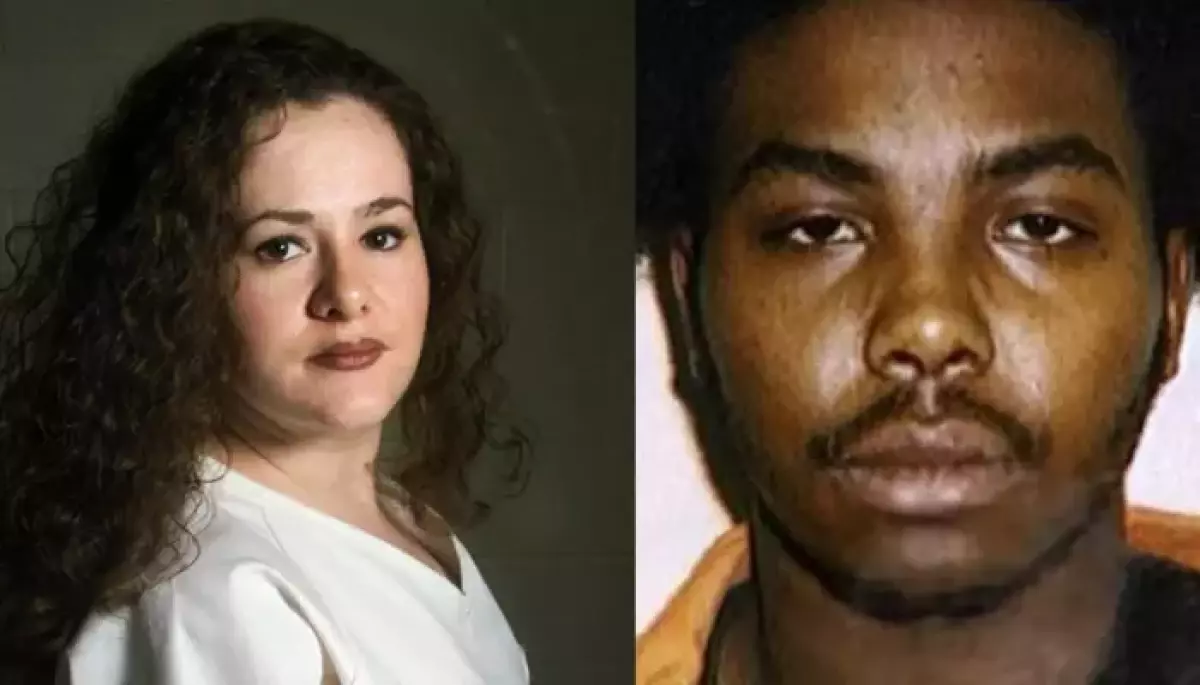
Carissa Hansen is the mother of Tennessee death-row inmate Christa Pike and was a licensed practical nurse who testified during Pike’s capital proceedings. Court records describe a complicated mother-daughter relationship and a childhood marked by instability, while Hansen herself acknowledged significant problems in her parenting and home environment. Hansen’s testimony later became part of the record considered in Pike’s appeals concerning whether her childhood, mental health and other mitigating circumstances had been adequately presented to the jury.
Introduction
Carissa Hansen is best known publicly as the mother of Christa Pike, the Tennessee woman whose 1995 murder conviction and death sentence became one of the state’s longest-running capital cases.
Hansen was not a defendant in Pike’s murder case. Her importance to the story comes from her role as Pike’s mother and from testimony she gave during the legal proceedings surrounding her daughter’s death sentence.
Those court records provide an unusually detailed, although complicated, picture of Pike’s childhood.
Hansen testified about where Pike lived, the death of Pike’s paternal grandmother, Pike’s behavior as a child and teenager, an overdose, relationships within the household and difficulties involving mental-health treatment. Other court records also describe Hansen’s own struggles during Pike’s childhood.
The information is important because Pike’s lawyers later argued that the jury that sentenced her to death did not receive the full picture of her traumatic upbringing and mental-health history.
At the same time, it is important not to simplify the record into a claim that Hansen or Pike’s family caused the 1995 murder. Courts considered the evidence about Pike’s childhood as mitigating background, not as a legal finding that her family was responsible for her later crime.
Recent interest in Carissa Hansen has increased following the September 2026 failed execution of Christa Pike. Pike survived the lethal-injection attempt and was hospitalized, putting her decades-old case back into national attention.
Who Is Carissa Hansen?
Carissa Hansen is Christa Pike’s biological mother.
Court records identify Hansen as a licensed practical nurse who testified during proceedings involving her daughter.
Her testimony became particularly significant because Pike’s defense lawyers were attempting to explain the circumstances of her childhood and argue that important mitigating evidence had not been adequately presented during her original capital sentencing.
The Tennessee Supreme Court’s record includes Hansen’s testimony about Pike’s childhood after the death of her paternal grandmother. Hansen said Pike lived with her for approximately 95 percent of the time after her grandmother died.
Hansen’s testimony did not present a simple picture of a conventional parent-child relationship. Instead, it described years of behavioral problems, family conflict and difficulties surrounding Pike’s mental health.
The record also contains Hansen’s own admissions about her behavior during Pike’s childhood.
These details are important because they come from court testimony rather than from modern internet speculation.
What Happened to Christa Pike’s Family?
Christa Pike was born in 1976 in West Virginia to Carissa Hansen and Emil Glenn Pike.
Her parents’ relationship was unstable, and Pike spent significant portions of her childhood in the care of her paternal grandmother.
Later court proceedings focused heavily on the effect of that family instability.
The Sixth Circuit summarized Pike’s social history by noting that Hansen testified that Pike spent much of her childhood with her paternal grandmother because neither Hansen nor her husband was consistently at home. The court record also states that Hansen described herself as a drug abuser and heavy drinker during Pike’s childhood.
That does not mean every allegation made about the family was independently proven.
Instead, these details should be understood as testimony and evidence presented during Pike’s legal proceedings.
The distinction matters because Pike’s later lawyers argued that the overall history should have been given greater weight during her sentencing, while courts ultimately rejected her claims for relief.
Carissa Hansen’s Relationship With Christa Pike
The relationship between Hansen and Pike was complicated.
One of the most important pieces of evidence came directly from Hansen’s testimony.
She told the court that Pike had lived with her for most of the period after the death of Pike’s paternal grandmother. Hansen also discussed Pike’s mental-health struggles following the grandmother’s death.
Hansen testified that Pike attempted suicide by overdose after her grandmother died.
She also acknowledged that she had smoked marijuana with Pike as a teenager, explaining that she had done so to try to establish a friendship with her daughter.
That detail has received attention because it illustrates how unconventional and difficult their relationship had become.
Rather than describing Hansen simply as an absent parent, the record shows a more complicated situation: Pike lived with her mother for much of her later childhood, but the relationship included significant behavioral and family problems.
What Did Carissa Hansen Say About Pike’s Childhood?
Hansen’s testimony covered a number of incidents involving Pike’s behavior.
According to the Tennessee Supreme Court record, Hansen testified that Pike had experienced behavioral problems for years.
Among the details presented in court were:
- Pike experienced serious emotional difficulties following her grandmother’s death.
- Hansen testified about an overdose by Pike.
- Hansen said Pike had begun growing marijuana at home when she was young.
- Pike had threatened to run away.
- Hansen allowed Pike to have a live-in boyfriend when Pike was about 14.
- Hansen testified about an incident involving a knife and that boyfriend.
- Hansen said Pike had lied to and stolen from her.
- Pike eventually left high school.
- Hansen characterized Pike’s behavior as increasingly difficult from an early age.
These details came from testimony presented during Pike’s legal proceedings.
They should not be interpreted as a complete psychological assessment of Pike’s childhood.
Other witnesses, including family members and mental-health professionals, gave additional testimony that presented other aspects of Pike’s upbringing.
Did Carissa Hansen Abuse Christa Pike?
The available court records should be handled carefully on this question.
They document neglect, family instability, substance abuse and other difficult circumstances, but they do not establish a simple court finding that Hansen committed a specific pattern of physical abuse against Pike.
Pike’s later attorneys presented broader allegations of childhood abuse and sexual trauma as part of their mitigation case.
Some of those allegations concerned people other than Hansen.
The Sixth Circuit’s review of Pike’s case described her upbringing as one of “substantial difficulty and strife” and summarized testimony concerning neglect, substance abuse and other traumatic experiences.
But the existence of difficult childhood circumstances and the legal responsibility for Pike’s later murder are separate questions.
A responsible account therefore should not state that Hansen “caused” Pike to commit murder.
No such conclusion was established by the courts.
What Happened After Christa Pike’s Grandmother Died?
Pike’s paternal grandmother was a particularly important person in the family history.
Court testimony indicated that Pike spent much of her childhood with her grandmother because of instability at home.
The grandmother later became seriously ill with cancer and died when Pike was about 12.
Hansen testified that Pike attempted suicide following her grandmother’s death. Other evidence presented during later proceedings described the grandmother’s death as a major turning point in Pike’s life.
Pike’s lawyers later relied on this history when arguing that her emotional and psychological condition had not been adequately understood at the time of her capital sentencing.
A 2021 Tennessee court filing supporting Pike’s post-conviction arguments likewise described her grandmother’s illness and death as a major disruption in her childhood and cited evidence concerning her mental-health difficulties afterward.
The significance of the grandmother is therefore supported by multiple parts of the legal record.
What Did Carissa Hansen Say About Mental Health?
Mental health became one of the most important themes in Pike’s later legal challenges.
Hansen’s testimony indicated that Pike experienced serious emotional problems after her grandmother’s death.
However, later post-conviction litigation raised a broader question: whether Pike received adequate mental-health care during her childhood and whether the jury that sentenced her to death heard enough about that history.
The Sixth Circuit reviewed this issue in detail.
In its 2019 decision, the court noted that Hansen had testified that Pike attempted suicide after her grandmother’s death but that Hansen had not obtained much psychiatric or psychological help for her afterward.
A later Tennessee filing by Pike’s attorneys argued that her bipolar disorder and PTSD had not been properly managed and that she had received inadequate mental-health treatment while growing up. Those statements represented the defense’s legal position, rather than an independent finding by the court that Hansen alone was responsible.
This distinction is essential when discussing Carissa Hansen.
Carissa Hansen and the Allegations of Substance Abuse
Another significant part of the court record concerns Hansen’s own behavior.
During Pike’s federal proceedings, the Sixth Circuit summarized testimony that Hansen had acknowledged being a drug abuser and heavy drinker during Pike’s childhood.
The court said Hansen testified that these circumstances contributed to Pike spending substantial time with her paternal grandmother.
The Tennessee Supreme Court record also documents Hansen’s testimony about her relationship with Pike and the family’s difficulties.
These statements are part of the public legal record and can therefore be reported.
However, they should not be expanded into claims about Hansen’s present life unless supported by reliable evidence.
There is very limited trustworthy information about her current circumstances.
What Was Hansen’s Relationship With Pike’s Father?
Pike’s father was Emil Glenn Pike.
Glenn Pike also testified during proceedings involving his daughter.
His testimony described another difficult parent-child relationship.
According to the Tennessee court record, Glenn said he had kicked Pike out of his home twice, with the final incident occurring in 1989. He also testified that he had signed adoption papers for Pike before she turned 18.
The court record therefore presents a family structure in which Pike experienced significant instability involving both parents.
But the parents’ accounts should not be treated as identical.
Each provided testimony about Pike’s upbringing from their own perspective, and other witnesses provided additional information.
Was Carissa Hansen Present During Christa Pike’s Legal Case?
Yes.
Hansen was a witness during the original capital proceedings and her testimony later became part of the record examined during post-conviction litigation.
This is significant because she was not merely identified as Pike’s mother in a background report.
She personally provided testimony about her daughter’s childhood.
That testimony included information about Pike’s living arrangements, behavior, mental-health struggles and relationship with her mother.
Later appeals examined whether the original defense had adequately presented mitigating evidence.
In the 2019 Sixth Circuit case, the court concluded that although the social-history material was extensive, much of its general content had already been presented to the jury through witnesses including Hansen.
That ruling is important because it shows why Pike’s lawyers continued to focus on the adequacy of her original defense.
Did the Courts Blame Carissa Hansen for Pike’s Crime?
No.
There is no court ruling establishing that Hansen was legally responsible for the 1995 murder of Colleen Slemmer.
Pike was convicted because of her own participation in Slemmer’s killing.
Evidence about Pike’s childhood was introduced primarily as mitigating evidence in connection with her death sentence and later appeals.
This distinction is especially important in online discussions, where family history can easily become simplified into claims about causation.
A difficult childhood may provide context for a defendant’s development without eliminating personal criminal responsibility.
That is essentially the legal distinction reflected throughout Pike’s appeals.
How Does Carissa Hansen Fit Into Christa Pike’s Death Penalty Case?
Hansen’s role is important because Pike’s childhood became central to the question of mitigation.
Pike was 18 when Slemmer was murdered in January 1995.
She was subsequently convicted of first-degree murder and sentenced to death.
Over the following decades, her lawyers argued that her history of abuse, neglect, mental illness and developmental difficulties deserved greater consideration.
Hansen’s testimony was one part of the evidence supporting that broader narrative.
The federal appeals court eventually rejected Pike’s claims, noting that much of the general social history had already been presented during the original penalty phase.
Thus, Hansen’s testimony was significant, but it did not ultimately change Pike’s sentence.
What Happened to Christa Pike in 2026?
Interest in Carissa Hansen has increased sharply because of the latest developments in her daughter’s case.
Tennessee attempted to execute Pike by lethal injection on September 30, 2026.
The attempt failed.
Pike survived and was transported for medical treatment. Her attorneys later reported that she remained unconscious and on a ventilator, while the state maintained that its established execution protocol had been followed.
The failed execution led Tennessee Governor Bill Lee to halt scheduled executions for the remainder of 2026 and order an independent review.
The development does not establish any new allegation against Hansen.
Instead, it has prompted renewed public examination of Pike’s entire history, including her childhood and family background.
What Do We Know About Carissa Hansen Today?
This is where verified information becomes limited.
There are recent online articles identifying Hansen as Pike’s mother, but they generally rely on historical court records rather than new information from Hansen herself.
There is no strong, authoritative public record establishing Hansen’s current occupation, residence or day-to-day life.
For that reason, claims circulating online about where she lives today or what her relationship with Pike currently looks like should be treated cautiously unless supported by a direct interview, official record or another reliable primary source.
The safest factual description is that Carissa Hansen is Christa Pike’s mother and was a significant witness in the legal proceedings concerning Pike’s childhood and death sentence.
What Officials and Courts Have Said
The most reliable information about Hansen comes from the courts rather than recent social-media reports.
The Tennessee Supreme Court documented Hansen’s testimony about Pike’s childhood, including Pike’s living arrangements after her grandmother’s death, her overdose, family relationships and behavioral difficulties.
The Sixth Circuit Court of Appeals later summarized Hansen’s testimony when reviewing Pike’s federal death-penalty litigation. The court described an upbringing marked by significant difficulty and noted testimony concerning Hansen’s substance abuse, Pike’s time with her grandmother and limited mental-health support after the grandmother’s death.
The recent developments concerning Pike’s failed execution come from a separate part of the legal and corrections system.
The Tennessee Department of Correction has defended its execution procedures, while Pike’s attorneys have alleged that problems with IV lines contributed to the failed execution. Those claims remain part of an ongoing dispute and investigation.
Why Carissa Hansen’s Story Matters
Carissa Hansen’s story matters primarily because it helps explain why Christa Pike’s childhood became an important part of her death-penalty litigation.
The record does not provide a simple story of one parent or one event determining Pike’s future.
Instead, it describes multiple factors:
- An unstable family environment.
- Significant time spent with Pike’s paternal grandmother.
- The grandmother’s death when Pike was young.
- Emotional and behavioral difficulties.
- Problems involving substance use within the household.
- Difficult parent-child relationships.
- Questions about mental-health treatment.
- Later allegations of childhood trauma and abuse.
These circumstances were presented as mitigation.
They were not a legal justification for the murder.
That distinction allows readers to understand the family history without confusing explanation with excuse.
What Happens Next?
There is currently no confirmed public indication that Carissa Hansen will make a new public statement about her daughter.
The more immediate developments concern Christa Pike’s legal and medical situation following the failed execution attempt.
Tennessee has launched a review of its execution procedures, while Pike’s legal team continues to pursue relief.
As of the latest reports, Pike’s condition remained serious, and the long-term outcome of the failed execution was uncertain.
Any future legal development involving Pike could again bring attention to the evidence concerning her childhood.
But unless Hansen herself speaks publicly or new official records emerge, there is no reliable basis for making claims about her current private life.
The Bottom Line on Carissa Hansen
Carissa Hansen is Christa Pike’s mother and a significant witness in the legal record surrounding Pike’s childhood.
She testified that Pike spent much of her childhood with her paternal grandmother and described serious behavioral and emotional problems after the grandmother’s death.
Hansen also acknowledged her own struggles during Pike’s upbringing, including substance abuse and difficulties within the family environment. Her testimony later became part of the record examined by appellate courts considering Pike’s challenges to her death sentence.
The public record does not, however, support reducing Pike’s story to a simple claim that her mother caused her later criminal conduct.
Christa Pike was convicted of the 1995 murder of Colleen Slemmer based on evidence of her own conduct. Her childhood history was considered as potential mitigation, not as a determination of guilt or innocence.
Following the failed execution attempt in September 2026, interest in Pike’s family has understandably increased. But much of what is known about Carissa Hansen remains rooted in court testimony from decades ago rather than new information about her life today.
Frequently Asked Questions
1. Who is Carissa Hansen?
Carissa Hansen is Christa Pike’s biological mother. She was identified in Tennessee court records as a licensed practical nurse and testified about Pike’s childhood during proceedings connected with her daughter’s capital case.
2. What did Carissa Hansen say about Christa Pike’s childhood?
Hansen testified about Pike spending much of her childhood with her paternal grandmother, Pike’s emotional problems after the grandmother’s death, an overdose, behavioral difficulties and problems within the family.
3. Was Carissa Hansen a defendant in the Colleen Slemmer murder?
No. Hansen was not charged as a participant in Slemmer’s 1995 murder. Her relevance to the case comes from her role as Pike’s mother and as a witness concerning Pike’s childhood.
4. Who was Christa Pike’s father?
Christa Pike’s father was Emil Glenn Pike. He also testified during legal proceedings concerning his daughter’s childhood and described conflicts in their relationship.
5. What happened to Christa Pike’s grandmother?
Pike’s paternal grandmother became seriously ill with cancer and died when Pike was about 12. Court records describe the grandmother as an important figure in Pike’s childhood, and Hansen testified about Pike’s emotional reaction following her death.
6. Did Carissa Hansen testify in Christa Pike’s case?
Yes. Hansen testified during Pike’s capital proceedings, and her testimony was later discussed in state and federal appellate proceedings.
7. Where is Carissa Hansen now?
Reliable public information about Hansen’s current whereabouts and private life is limited. Recent reports identify her as Pike’s mother but do not provide sufficient authoritative information to establish her current circumstances.
8. Why is Carissa Hansen being discussed again in 2026?
Interest in Hansen has increased following the failed September 30, 2026 execution attempt involving Christa Pike. The incident revived public attention to Pike’s entire history, including her childhood and family background.