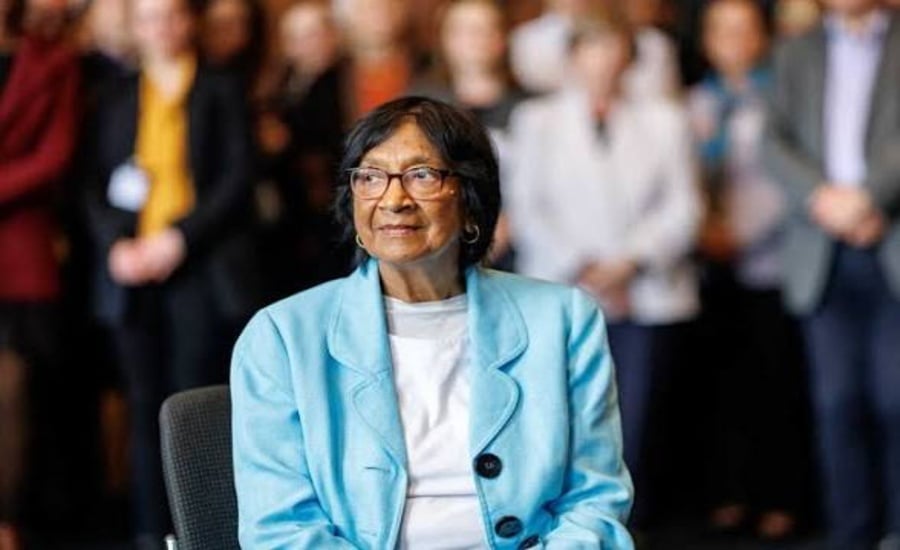
Navi Pillay, the South African jurist and former United Nations High Commissioner for Human Rights, has two adopted daughters, Isvari and Kamini, with her husband, lawyer Paranjothee “Gaby” Anthony Pillay. Her experience as a mother unfolded alongside a legal career shaped by apartheid, racial discrimination and the pursuit of justice. Her family life is less publicly documented than her professional achievements, so details about her daughters’ private lives should be treated cautiously.
Navi Pillay Children: Her Journey Through Motherhood, Apartheid and International Justice
Navi Pillay’s life is known internationally for her work in human rights, international criminal law and judicial accountability. But beyond her public career, she is also a mother of two adopted daughters, Isvari and Kamini, whom she raised with her husband, lawyer Paranjothee “Gaby” Anthony Pillay. Her family life developed alongside a professional journey that began in apartheid-era South Africa and eventually took her to some of the world’s most important legal institutions.
Born on September 23, 1941, in Clairwood, Durban, Navanethem “Navi” Pillay grew up in a working-class Tamil Indian family. She experienced the effects of racial discrimination from an early age and pursued an education that helped her enter a legal profession where opportunities for women of colour were severely restricted.
Pillay later became a pioneering South African lawyer, an international judge and the United Nations High Commissioner for Human Rights from 2008 to 2014. On October 9, 2026, she was awarded the Nobel Peace Prize for her efforts to promote peace and international law, according to the United Nations’ official biography.
Although her professional achievements are extensively documented, information about her daughters and private family life is more limited. Understanding what is publicly known about her children, marriage and career provides a fuller picture of the person behind her international reputation.
Who Are Navi Pillay’s Children?
Navi Pillay has two adopted daughters, Isvari and Kamini, according to published biographical reporting by India Today.
Pillay has generally kept her family life away from the public spotlight. Unlike her work as a judge and human rights advocate, her daughters’ personal lives have not been extensively documented in authoritative public biographies.
As a result, readers should distinguish between the limited confirmed information about her family and unsupported claims sometimes repeated on biography websites.
The publicly reported facts establish that Pillay became a mother while pursuing a demanding legal career. Her family life is an important part of her biography, but the available evidence does not justify making assumptions about her daughters’ occupations, relationships, current residences or other private details.
Meet Isvari Pillay
Isvari is identified in published reporting as one of Navi Pillay’s two adopted daughters.
Beyond her name and relationship to Pillay, detailed independently verified information about Isvari’s life is limited. Publicly available institutional biographies of Pillay concentrate on her legal career, judicial appointments and contributions to human rights rather than the private circumstances of her children.
It is therefore important not to confuse the absence of extensive public information with a lack of significance in the family. It simply means that Isvari’s private life has not been documented in the same detail as her mother’s professional achievements.
Meet Kamini Pillay
Kamini is the second daughter identified in biographical reporting about Navi Pillay’s family.
Like her sister, she has largely remained outside the public narrative surrounding her mother’s international career. There is insufficient reliable public information to provide a detailed account of her education, profession or present-day activities.
Respecting that distinction is particularly important when writing about the families of prominent public figures. A person’s professional reputation does not automatically make every aspect of their relatives’ lives public information.
What can be stated is that Pillay’s experience of motherhood formed part of a life that also involved demanding legal responsibilities, international travel and work on sensitive human rights cases.
Who Is Navi Pillay’s Husband?
Navi Pillay married Paranjothee “Gaby” Anthony Pillay, a lawyer, in January 1965, according to biographical accounts.
Their relationship began while both were connected to the legal profession. Gaby Pillay became part of the personal and family history behind Navi Pillay’s subsequent career.
The couple adopted two daughters, Isvari and Kamini. However, detailed public information about their family arrangements and the division of parenting responsibilities is limited.
It would therefore be inappropriate to assume exactly how the couple managed childcare, household responsibilities or career decisions without reliable evidence.
Pillay’s biography nevertheless illustrates the challenges of pursuing a demanding profession while maintaining family relationships. Her work eventually involved service in South Africa, Rwanda, the Netherlands and the United Nations system.
Her marriage and motherhood belong to the broader story of how she built a life that included both family responsibilities and an unusually influential international legal career.
How Did Apartheid Shape Navi Pillay’s Early Life?
To understand Pillay’s journey through motherhood and international justice, it is essential to understand the society in which she grew up.
Apartheid was South Africa’s system of institutionalised racial segregation and discrimination. It restricted political rights, influenced where people could live and study, and created significant barriers to professional advancement for people classified as non-white.
Pillay was born into a Tamil Indian family in Durban, where her father worked as a bus driver. Her family had limited financial resources, but her parents placed considerable importance on education.
These circumstances helped shape her determination to study law and pursue a profession through which she could challenge unequal treatment.
Education as a route to professional opportunity
Pillay attended the University of Natal, earning a Bachelor of Arts degree in 1963 and a Bachelor of Laws degree in 1965.
Her educational achievements were significant in a society where racial discrimination affected access to educational and professional opportunities.
After completing her legal studies, she encountered barriers in the profession. Rather than abandoning her ambitions, she established her own legal practice in Natal in 1967.
South African biographical records identify her as the first Black woman to open her own law practice in the province.
Her early work included representing people affected by apartheid and challenging abuses of power. These experiences helped establish the legal and human rights commitments that would define her later career.
From personal experience to public advocacy
Pillay’s background did not automatically determine the course of her life, but it gave her direct experience of the inequalities that shaped South African society.
Her legal work enabled her to challenge aspects of that system through professional advocacy and the law.
This connection between personal experience and public service is central to understanding her achievements. She did not simply rise through the legal profession; she used her position to address discrimination and protect people whose rights were threatened.
That work eventually extended beyond South Africa and into international institutions concerned with war crimes, genocide and human rights violations.
How Did Navi Pillay Balance Motherhood With Her Legal Career?
Pillay’s career involved responsibilities that extended far beyond a conventional legal practice. She represented clients, worked on major legal questions and later held judicial and United Nations positions that required international engagement.
Her two daughters, Isvari and Kamini, were part of her family life during this broader professional journey.
However, there is limited verified public information describing the daily realities of balancing motherhood with those responsibilities. It would be misleading to invent stories about childcare arrangements, family conversations or specific sacrifices that have not been documented.
What is clear is that Pillay developed a long career while raising a family. Her professional record demonstrates sustained commitment to legal work, while published biographical reporting confirms that she is a mother of two adopted daughters.
Her story also raises a broader question about women in demanding professions: how can institutions make it possible for people to pursue public responsibilities without having to give up family life?
That question is relevant across law, politics, academia and international organisations. Women who enter senior positions often navigate expectations about family responsibilities alongside professional demands. Their experiences differ, and no single biography can represent every family’s circumstances.
Pillay’s career is a useful starting point for discussing these questions, but the details of her own experience should not be embellished beyond the evidence.
How Did Navi Pillay Become an International Justice Leader?
Pillay’s career progressed from legal practice in apartheid-era South Africa to judicial roles in international institutions.
Her early work as a lawyer
During her years in legal practice, Pillay represented people affected by apartheid and worked on issues involving detention, torture and prisoners’ rights.
Her work helped establish her reputation as a lawyer willing to challenge abuses of authority.
In 1995, after the end of apartheid, she became a judge of South Africa’s High Court. Her appointment represented an important milestone in a legal system undergoing profound change.
Her career also reflected the broader transition from a racially discriminatory system toward democratic institutions committed to equality before the law.
Work at the International Criminal Tribunal for Rwanda
Pillay later served at the International Criminal Tribunal for Rwanda, which was established to prosecute individuals responsible for serious crimes connected to the 1994 genocide.
She played a significant role in the tribunal’s work on sexual violence and international criminal law.
The tribunal’s 1998 Akayesu judgment became a landmark decision because it recognised that rape and sexual violence could constitute acts of genocide when the necessary legal elements, including the required intent, were established.
The judgment contributed to the development of international law by making clear that sexual violence could be central to the commission of genocide rather than merely an incidental consequence of conflict.
Service at the International Criminal Court
Pillay served as a judge at the International Criminal Court from 2003 to 2008.
The court prosecutes individuals accused of certain of the gravest international crimes, subject to its jurisdiction and the applicable legal requirements.
Her work there added another dimension to a career focused on accountability and the role of law in responding to mass atrocities.
United Nations High Commissioner for Human Rights
In 2008, Pillay became the United Nations High Commissioner for Human Rights, a position she held until 2014.
The role involved promoting and protecting human rights internationally, drawing attention to violations and supporting efforts to strengthen human rights standards.
Her responsibilities covered a broad range of issues, including discrimination, freedom, the protection of vulnerable communities and accountability for abuses.
These roles placed her at the centre of international debates about how governments and institutions should respond to serious violations of human rights.
What Does Navi Pillay’s 2026 Nobel Peace Prize Mean?
On October 9, 2026, Navi Pillay was awarded the Nobel Peace Prize for her efforts to promote peace and international law, according to the United Nations’ official Nobel Peace Prize biography.
The recognition highlighted a career spanning anti-apartheid legal advocacy, international criminal justice and human rights leadership.
Her professional record includes work at the Rwanda tribunal, the International Criminal Court and the United Nations human rights office. These roles contributed to international efforts to establish accountability for serious crimes and protect fundamental rights.
The award has also renewed interest in her personal background, including her upbringing, marriage and children.
For readers searching for information about Navi Pillay’s family, it is important to separate the reasons for the award from details of her private life. The Nobel recognition concerns her public contribution to peace and international law; it does not provide new information about her daughters.
The prize also draws attention to the broader role of legal institutions in responding to conflict and protecting people from abuse. International justice depends on legal frameworks, evidence, due process and the willingness of institutions to pursue accountability even when cases are politically sensitive.
Pillay’s career demonstrates how legal work can influence these institutions over decades.
What Have Official Organisations Said About Navi Pillay?
The United Nations’ official biography documents Pillay’s career in international human rights and justice and records her recognition with the 2026 Nobel Peace Prize.
South African History Online provides a biographical account of her upbringing, education and professional milestones. The University of the Witwatersrand has also published biographical material describing her achievements and her early background as the daughter of a bus driver.
These institutional sources are useful for verifying her professional history, including her legal education and appointments.
For information about her daughters, published reporting by India Today identifies Isvari and Kamini as her adopted children. The available official biographies provide less detail about their lives.
This difference in coverage matters. Professional appointments and public awards are usually recorded in institutional documents, while family information may appear primarily in interviews and biographical reporting.
A trustworthy account should acknowledge the limits of each source rather than fill gaps with assumptions.
Why Navi Pillay’s Story Matters Beyond Her Family Life
Pillay’s life connects several important themes: access to education, gender equality, racial discrimination, motherhood and the development of international justice.
Her childhood in a working-class family demonstrates the importance of educational opportunities. Her early legal career shows how professionals can use established institutions to challenge discrimination. Her international work illustrates the role of courts and human rights organisations in addressing serious abuses.
Her experience as a mother adds a personal dimension, although much of that part of her life remains private.
It is possible to recognise the importance of family in a public figure’s life without claiming to know details that have not been disclosed. In Pillay’s case, the confirmed information about her daughters provides a meaningful starting point, while the limited public record calls for restraint.
Her wider legacy rests primarily on her legal work and efforts to strengthen accountability for human rights violations. Those achievements provide substantial grounds for understanding her historical significance without turning her family into a source of speculation.
What Happens Next?
There is no confirmed public announcement indicating a new development concerning Isvari or Kamini. Their personal lives remain largely outside public reporting.
Interest in Navi Pillay’s family may continue following her Nobel Peace Prize recognition and renewed attention to her biography. Any further details about her children should be based on reliable reporting or statements from the family.
For now, the established facts are that Pillay has two adopted daughters, Isvari and Kamini, and was married to lawyer Paranjothee “Gaby” Anthony Pillay. Her public legacy is defined by her work in South African law, international criminal justice and human rights.
Conclusion
Navi Pillay’s story extends beyond her career as a lawyer, judge and human rights leader. She is also the mother of two adopted daughters, Isvari and Kamini, and built her family life alongside a demanding professional journey.
Raised in apartheid-era Durban, Pillay overcame substantial racial and gender barriers to enter the legal profession. She later became a judge at international courts and led the United Nations human rights office between 2008 and 2014.
Her 2026 Nobel Peace Prize has brought renewed attention to her lifelong commitment to international justice.
Although details about her daughters remain limited, the available information offers a respectful picture of the family life behind a prominent public career. The most reliable account recognises both sides of her story: her role as a mother and her contributions to the law, without inventing private details that the public record does not establish.