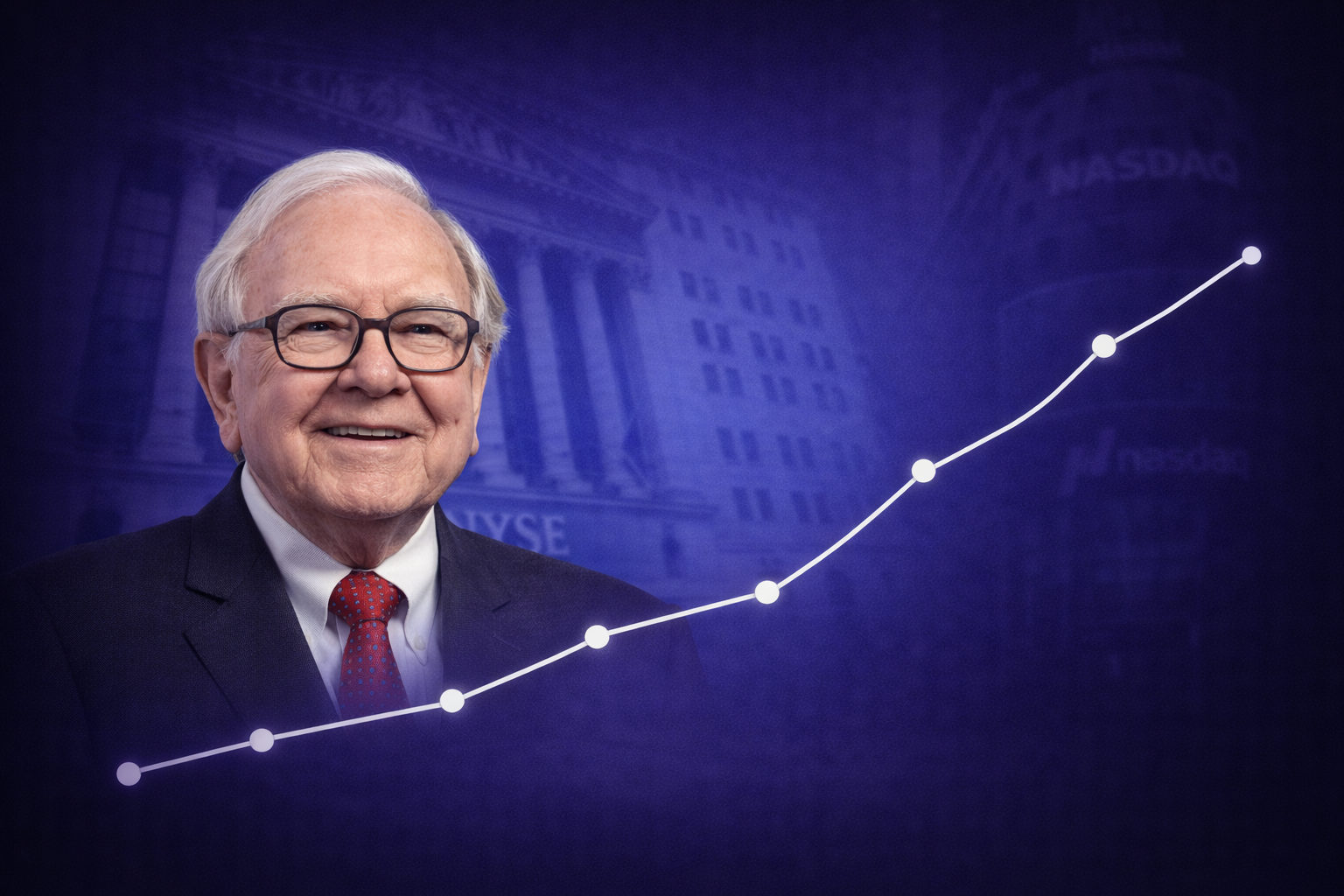
Warren Buffett’s net worth is estimated at approximately $145 billion to $147 billion in recent billionaire rankings, although the exact figure changes with market prices and the methodology used by each tracker. His wealth comes primarily from his long-held stake in Berkshire Hathaway, the investment conglomerate he built over decades. In a major leadership development, Berkshire announced on September 18, 2026, that Buffett had become chairman emeritus, while his son Howard G. Buffett was elected chairman of the board. Warren Buffett remains a director of the company.
Introduction
Warren Buffett’s net worth remains among the largest personal fortunes in the world, with recent estimates placing his wealth at approximately $145 billion to $147 billion. The American investor accumulated much of his fortune through Berkshire Hathaway, the company he transformed from a struggling textile manufacturer into a diversified business group with major investments and operating companies.
The latest estimates come as Berkshire Hathaway continues its leadership transition. On September 18, 2026, the company announced that Buffett would become chairman emeritus and remain on its board of directors. His son, Howard G. Buffett, was elected chairman of the board, while Greg Abel continues to serve as chief executive officer.
The change marks another step in Buffett’s gradual withdrawal from Berkshire’s top leadership positions. However, it does not mean that his fortune has disappeared or that he has automatically sold his remaining investments. His net worth continues to depend largely on the value of his assets, particularly Berkshire Hathaway shares, along with his charitable giving.
For readers tracking Warren Buffett’s wealth, three points matter most: his estimated fortune, the value of his Berkshire Hathaway holdings, and the effect of his long-running philanthropic commitments.
What Happened? Warren Buffett’s Net Worth in 2026
Warren Buffett’s fortune is estimated at around $145 billion to $147 billion in recent billionaire rankings. Bloomberg’s Billionaires Index listed him at approximately $147 billion in its latest available results, while Forbes’ real-time profile placed him at about $146.4 billion in September 2026.
These figures are estimates, not audited statements of Buffett’s personal finances. They can change as Berkshire Hathaway’s share price moves, as other assets are revalued, and as the trackers update their calculations.
Forbes and Bloomberg use their own methodologies to estimate billionaire wealth. Differences between their figures are normal and do not necessarily indicate an error. A ranking may also reflect a different market date, meaning two estimates published close together can still vary.
Warren Buffett’s estimated wealth at a glance
- Estimated net worth: Approximately $145 billion to $147 billion in recent rankings.
- Main source of wealth: His long-term investment in Berkshire Hathaway.
- Company leadership: Buffett stepped down as CEO at the end of 2025, with Greg Abel succeeding him on January 1, 2026.
- Latest board development: Berkshire named Buffett chairman emeritus on September 18, 2026, and elected Howard G. Buffett as chairman.
- Current company role: Buffett remains a member of Berkshire Hathaway’s board of directors.
- Philanthropy: Buffett has pledged to give away more than 99% of his wealth over time.
Sources: Forbes’ Warren Buffett profile and Bloomberg Billionaires Index.
The important distinction is that net worth is not the same as cash in a bank account. A substantial portion of Buffett’s wealth is linked to shares and other assets. Their value can rise or fall even when he does not buy or sell anything.
Key Details: How Warren Buffett Built His Fortune
1. Berkshire Hathaway became the foundation of his wealth
Buffett’s fortune is closely connected to Berkshire Hathaway, the Omaha, Nebraska-based company that he began acquiring control of in the 1960s.
Berkshire originally operated as a textile business. Buffett gradually shifted its direction toward insurance, investments and the ownership of operating companies. Insurance businesses became particularly important because their premiums provide funds that can be invested, subject to insurance obligations and risks.
Over time, Berkshire expanded into a broad collection of businesses and investments. Its operations have included insurance, rail transportation, energy, manufacturing, services and retailing. It has also held significant investments in publicly traded companies.
This structure helped Buffett benefit from the long-term growth of businesses rather than relying solely on salary or short-term trading profits.
Berkshire’s official website and investor information provide company announcements, shareholder letters, annual reports and financial disclosures.
2. Berkshire Hathaway shares account for a major part of his fortune
Buffett’s personal wealth is heavily influenced by the market value of his Berkshire Hathaway stock.
Berkshire has two principal publicly traded share classes: Class A and Class B. Their prices differ substantially, but both represent ownership in the company. Buffett’s large stake has grown in value over many decades as Berkshire expanded and its share price appreciated.
Berkshire’s 2026 proxy statement, filed with the U.S. Securities and Exchange Commission, described Buffett as its largest shareholder. The filing reported that his shares represented approximately 30% of the company’s voting interest and 13.7% of its economic interest at the time covered by the document.
These percentages refer to different measures of ownership. Voting interest reflects influence over shareholder decisions, while economic interest reflects a shareholder’s proportional financial stake in the company. The figures should not be interpreted as a permanent snapshot of his holdings because shares and ownership arrangements can change.
The distinction also helps explain why Buffett’s estimated fortune can fluctuate by billions of dollars. A change in Berkshire’s market value can affect his estimated wealth even if his day-to-day spending remains unchanged.
3. He became wealthy through long-term investing
Buffett is widely associated with value investing: the practice of evaluating a business’s underlying value rather than buying a stock simply because its price is rising.
His approach has generally emphasized businesses with understandable operations, durable competitive advantages, capable management and the potential to generate cash over time.
Compounding has been central to this strategy. When investment returns are reinvested and generate additional returns over many years, growth can accelerate. Buffett benefited from applying capital over an unusually long investment career.
However, his results should not be treated as a guarantee that a similar approach will produce the same outcome for other investors. Berkshire’s scale, access to capital, business structure, timing and Buffett’s decades of experience all contribute to its history.
4. His salary is not the main explanation for his fortune
Buffett is known for accepting a relatively modest base salary compared with many executives at similarly large companies. Reuters reported in January 2026 that he had accepted an annual salary of $100,000 for more than four decades.
That figure is small compared with his estimated net worth, but it is not the primary driver of his wealth. His fortune has largely been built through ownership and investment returns rather than through accumulating executive pay.
This is an important difference between Buffett and business figures whose fortunes depend mainly on company stock awards, founder ownership in a technology business, or exceptionally large compensation packages.
Background: From Investor to One of the World’s Richest People
Warren Edward Buffett was born in Omaha, Nebraska, in 1930. He developed an interest in business and investing at a young age and later studied under economist and investor Benjamin Graham at Columbia Business School.
Buffett’s early investment career included partnerships through which he managed money for investors. He later gained control of Berkshire Hathaway and used it as the base for a much larger investment and operating business.
His reputation grew as Berkshire acquired businesses and accumulated stakes in major companies. Rather than focusing exclusively on buying and selling shares, Buffett increasingly built a company that could hold investments for long periods and own entire businesses.
Berkshire’s growth also benefited from the economics of insurance. Insurance companies collect premiums before all claims are paid. The funds held between collection and claim payments are often called float. When managed responsibly, float can provide a source of investment capital, although it comes with the obligation to pay valid insurance claims and can be affected by underwriting losses.
Buffett’s annual shareholder letters helped make his approach widely known. He frequently discussed business performance, capital allocation, mistakes and the importance of thinking like a long-term owner.
His partnership with the late Charlie Munger was another important part of Berkshire’s history. Munger, who died in 2023, helped shape the company’s emphasis on buying strong businesses at reasonable prices rather than focusing only on apparently cheap stocks.
Together, Buffett and Munger helped turn Berkshire into a major conglomerate and made the company’s annual shareholder meetings a significant event for investors.
What Officials and Berkshire Hathaway Said About the Leadership Changes
Greg Abel became CEO in January 2026
Berkshire announced in May 2025 that Greg Abel would become president and chief executive officer on January 1, 2026. Buffett was to remain chairman at that stage.
The succession plan was intended to maintain continuity while placing day-to-day executive leadership in Abel’s hands. Abel had served as Berkshire’s vice chairman for non-insurance operations and previously led Berkshire Hathaway Energy.
The company’s May 2025 announcement documented the planned transition.
Buffett became chairman emeritus in September 2026
On September 18, 2026, Berkshire announced that Buffett had been named chairman emeritus, effective immediately. The company said he would remain on the board and continue to offer his judgment and perspective.
The board elected Howard G. Buffett, Warren Buffett’s son and a Berkshire director since 1993, as chairman. Greg Abel remained CEO, while Susan L. Decker continued as lead independent director.
In the announcement, Abel described Buffett’s impact on Berkshire and its owners as unparalleled in American business history and said the company’s culture and values would remain central to its future.
The company’s official announcement is available through its 2026 news releases.
This development is significant for Berkshire’s governance, but it does not, by itself, establish a new value for Buffett’s personal fortune. His net worth remains a separate calculation based on assets, liabilities and estimated market values.
Why Philanthropy Matters to Warren Buffett’s Net Worth
Buffett’s wealth story is also unusual because he has repeatedly committed to giving away the overwhelming majority of his fortune.
Forbes has reported that he pledged to donate more than 99% of his wealth and has already given away tens of billions of dollars, primarily through the Gates Foundation and foundations associated with his children.
Those contributions matter when assessing his net worth. When Buffett donates shares, he no longer owns the donated assets personally. Depending on the timing and the way a wealth tracker calculates its estimate, donations can affect both his remaining fortune and how that fortune is reported.
However, a pledge to give away wealth over time is not the same as having already donated all of it. Buffett remains a billionaire because he continues to own substantial assets, including Berkshire Hathaway shares.
His philanthropic approach is also connected to his views on inheritance. He has argued that children should have opportunities and support without necessarily receiving the full wealth accumulated by their parents.
In 2010, Buffett joined Bill Gates and Melinda French Gates in launching the Giving Pledge, an initiative encouraging wealthy individuals and families to commit a majority of their fortunes to charitable purposes.
The initiative is a commitment rather than a government requirement. Each participant determines how to fulfill their pledge, and the timing and structure of donations can vary.
For readers comparing billionaire fortunes, philanthropy is one reason a person’s net worth can change even without a major movement in the stock market.
Why Warren Buffett’s Fortune Matters to Investors
Buffett’s estimated wealth attracts attention because it reflects the long-term performance of Berkshire Hathaway and his personal investment decisions. Yet his net worth should not be confused with a measure of Berkshire’s financial health or a recommendation to buy its stock.
There are several reasons his fortune remains relevant.
It illustrates the effect of compounding
Buffett’s career demonstrates how long investment periods can magnify the effect of returns. The process can work in reverse too: falling markets, poor business performance or lower valuations can reduce wealth.
It highlights the role of ownership
Buffett did not build his fortune primarily by collecting a large salary. His wealth is linked to owning an interest in a business that grew over many decades.
For entrepreneurs and investors, the broader lesson is that ownership can create substantial long-term value, but it also exposes owners to market risk and business uncertainty.
It shows why succession matters
Berkshire is a large organization with many businesses and investments. The transition from Buffett to Abel as CEO, followed by the move to chairman emeritus, is therefore more than a change in job title.
Investors will be watching whether Berkshire maintains its capital-allocation discipline, decentralized operating culture and approach to managing its insurance and non-insurance businesses.
The company’s results will depend on its assets, management decisions, market conditions and operating performance—not simply on Buffett’s personal reputation.
It demonstrates the limits of billionaire rankings
A net-worth ranking is an estimate, not a complete public statement of someone’s private finances. Public shareholdings can often be valued using market prices, but private assets, liabilities, charitable transfers and other factors may be less transparent.
That is why a figure from Forbes may differ from Bloomberg’s estimate, and why a billionaire’s position can change from one day to the next.
What Happens Next?
The main confirmed development is Berkshire Hathaway’s new leadership structure. Greg Abel is serving as CEO, Howard G. Buffett has become chairman of the board, and Warren Buffett remains a director in the role of chairman emeritus.
Investors can follow Berkshire’s official announcements, quarterly financial results, annual reports and regulatory filings for further information about the company’s performance and governance.
Buffett’s net worth will continue to move with the value of his assets, especially Berkshire Hathaway shares, and with any future charitable donations or changes in ownership. No single estimate should be treated as a guaranteed or permanent total.
The precise value of Buffett’s fortune on any particular day is therefore best checked against a dated billionaire ranking. Forbes and Bloomberg are useful reference points, but their numbers remain estimates and may differ because of their methodologies and update schedules.
For now, Buffett’s financial legacy rests on more than the headline figure. It includes the growth of Berkshire Hathaway, his influence on long-term investing, his role in shaping a distinctive corporate culture and his commitment to directing much of his wealth toward philanthropy.
Frequently Asked Questions
1. What is Warren Buffett’s net worth in 2026?
Recent billionaire rankings put Warren Buffett’s estimated net worth at approximately $145 billion to $147 billion. The exact figure changes with Berkshire Hathaway’s share price, other asset values and the methodology used by each ranking.
2. How did Warren Buffett make his money?
Buffett built most of his fortune through long-term investments and his ownership stake in Berkshire Hathaway. The company grew from a textile business into a diversified group with insurance operations, operating businesses and investments in publicly traded companies.
3. Does Warren Buffett still own Berkshire Hathaway shares?
Yes. Berkshire Hathaway’s 2026 proxy statement identified Buffett as its largest shareholder and reported that his holdings represented approximately 30% of voting interest and 13.7% of economic interest at the time covered by the filing. Those figures can change as holdings and share counts change.
4. Is Warren Buffett still the CEO of Berkshire Hathaway?
No. Greg Abel became Berkshire Hathaway’s CEO on January 1, 2026. Buffett remained chairman until September 18, 2026, when the company named him chairman emeritus and elected Howard G. Buffett as chairman of the board.
5. Is Warren Buffett still involved with Berkshire Hathaway?
Yes. Berkshire’s September 2026 announcement said Buffett would remain on the board of directors as chairman emeritus and continue to offer his judgment and perspective. This is different from serving as CEO or chairman of the board.
6. How much of Warren Buffett’s wealth has he donated?
Forbes has reported that Buffett has donated more than $72 billion, with the amount depending on the publication’s reporting date and calculations. His total donations may change over time, so a specific figure should be read alongside its source and date.
7. Does Warren Buffett keep his wealth in cash?
No. His fortune is not simply a cash balance. Much of it is tied to ownership of Berkshire Hathaway shares and other assets. As a result, his estimated net worth can change with financial markets even if he does not make a major transaction.
8. Why do Forbes and Bloomberg report different Warren Buffett net worth figures?
The publications use different valuation methods and may update their rankings at different times. Market prices can change rapidly, and estimates may treat certain assets or donations differently. Their figures are best understood as informed estimates rather than exact, audited totals.
:max_bytes(150000):strip_icc():focal(1019x768:1021x770)/kerri-russel-matthew-rhys-2-7badbdc662f7406ea6e19b65c0799f3c.jpg "Keri Russell Husband: Is She Married to Matthew Rhys?")